
How can simple actions in our homes and neighborhoods contribute to healing our planet? This was the central question explored during the latest webinar in URI Europe’s Healing the Earth and Restoring the Earth series, where participants came together to exchange practical ideas, inspiring stories, and community-based solutions for environmental sustainability.
The session, titled “Let Us Cherish the Earth Together – Practical Examples of Green Action,” featured Vjekoslav Saje from Balkan as a Soul-Bridge Cooperation Circle in Bosnia and Herzegovina. Through photographs and examples from his neighborhood in Sarajevo, Vjekoslav demonstrated how everyday choices can positively influence biodiversity, climate resilience, and community well-being.
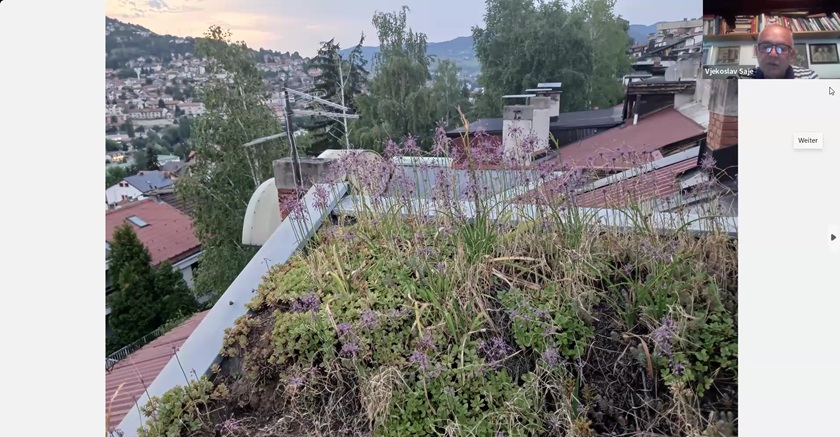
Among the many inspiring examples were green fences, bee-friendly gardens, rooftop vegetation, community clean-up initiatives, and responsible waste management. Vjekoslav also shared his experience of creating a rooftop garden, explaining how green roofs can provide insulation, absorb rainwater, reduce urban heat, and create space for plants and insects.
His presentation also highlighted some of the environmental challenges facing urban communities. Participants reflected on the consequences of excessive concrete and asphalt, the loss of green spaces, poor waste disposal, and the improper burning of garbage. These practices can contribute to pollution, flash flooding, biodiversity loss, and unhealthy living environments.
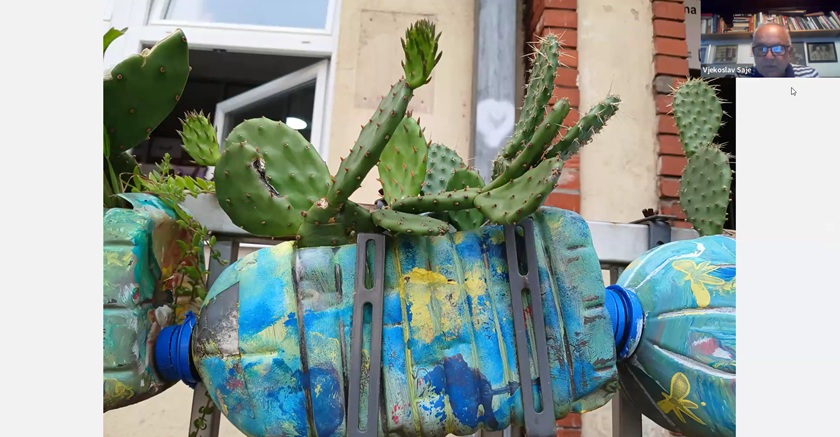
Another important part of the session focused on giving discarded materials a second life. Vjekoslav presented examples of projects that transform waste into art and useful objects, including creative initiatives involving people with disabilities. These examples demonstrated how environmental responsibility, creativity, social inclusion, and community participation can support one another.
The conversation then expanded from individual actions to the importance of collective responsibility. Participants discussed how residents, local communities, municipalities, faith-based organizations, and civil society groups can work together to promote sustainable practices and advocate for environmentally responsible decisions.
Lauren Van Ham contributed additional tools and examples for reducing waste and strengthening community-based environmental action. These included the Buy Nothing Project, the Zero Waste Hierarchy, and inspiring examples of upcycling within and beyond the URI network. She also shared examples of fashion created from discarded plastic and a medical clinic in Malawi constructed using plastic bottles.
Participants reflected on the importance of combining personal responsibility with community organizing and wider structural change. They also explored the relationship between environmental stewardship, spirituality, interfaith cooperation, and peacebuilding.
As the sixth gathering in URI Europe’s Healing the Earth and Restoring the Earth webinar series, the session once again demonstrated the power of sharing practical experiences across cultures and communities. Every garden planted, piece of waste reused, neighborhood cleaned, and sustainable practice shared can contribute to a healthier and more resilient future.
Watch the recording
The full webinar recording is available on the URI Europe YouTube channel: https://youtu.be/gCQqhI5__CY
Explore the resources
Lauren Van Ham shared several helpful tools and resources during the webinar:
1. Buy Nothing Project – a global movement
https://buynothingproject.org/
2. Zero Waste Movement:
Happen Films, one couple in New Zealand (17 min story):
https://www.youtube.com/watch?v=QBMuwWwkjM0
10 other documentaries - https://www.zerowaste.com/blog/top-10-zero-waste-films-
documentaries/
3. IM / CC Spotlight:
Low carbon fashion: Runa Ray / http://www.runaray.com/about-1
Links for your own upcycled projects with plastic bags:
Plastic bags into “yarn” to create a reusable bag: https://www.instructables.com/Recycle-Plastic-Shopping-Bags-into-Yarn/
Plastic bags into a plastic fabric for creating other items: https://www.instructables.com/Fuse-Plastic-Fabric-Technique/